

New Transport Solution: Road Freight Transports to the Gulf Region Now Available
Berlin, 21 April 2026
Transport markets towards the Gulf region are currently under noticeable pressure. The cause is geopolitical tensions in the Middle East, which are directly affecting international supply chains. For many companies this primarily means one thing: rising uncertainty regarding transit times, delayed arrivals, and limited plannability.
Sea freight is particularly affected. Bottlenecks along central routes mean containers are en route longer than usual and schedules are becoming increasingly unreliable. Air freight does not currently offer a consistently stable alternative either. Flight connections can change at short notice, capacities are limited, and for larger shipments this transport mode is often not economically viable.
Against this background, road transport is moving more strongly into focus.
Martin Internationale Spedition GmbH now offers organised FTL and LTL transports from Germany and the entire EU to the Gulf region and neighbouring markets.
Overview of new corridors
- Road freight to Iraq (medical technology, pharmaceuticals, and aid goods)
Transports run via Turkey and are carried out either directly or with structured reloading, depending on project requirements.
Why road freight transports to the Gulf region are gaining importance right now
Compared to sea and air freight, road transport currently shows itself to be significantly more stable. A key advantage lies in the lower dependence on geopolitical bottlenecks along international sea routes.
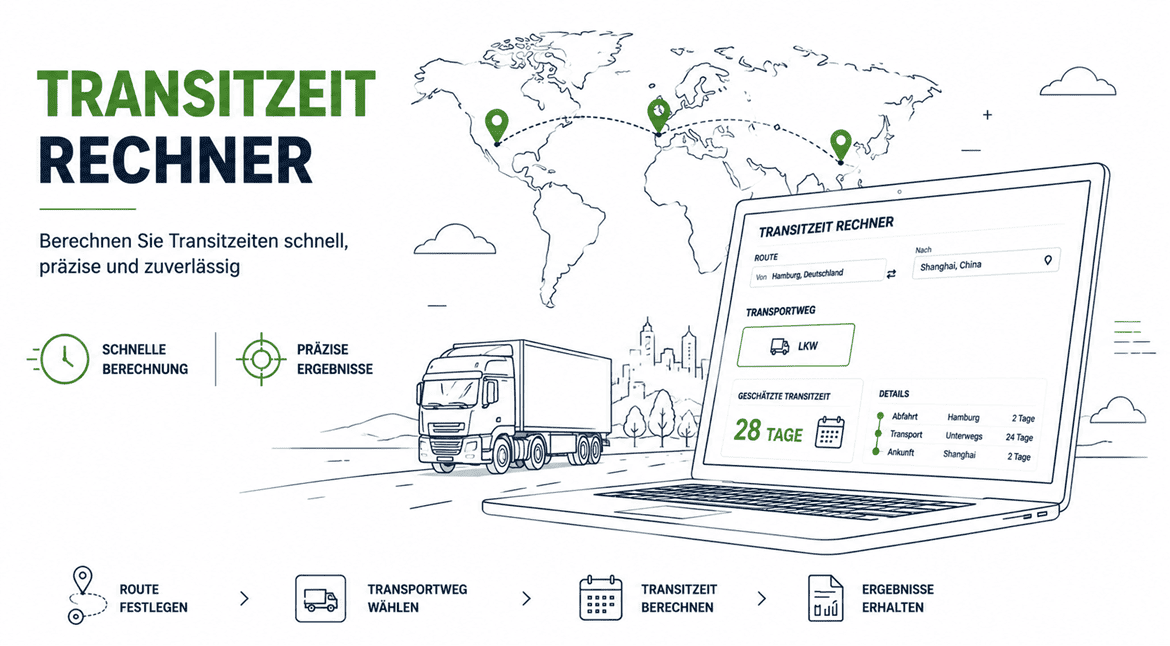
Transit times are currently more calculable. Full truckloads (FTL) typically reach their destination region within up to 25 days. Part loads (LTL) currently take around 35 to 40 days, depending on the corridor and reloading.
Economically too, road freight is the most realistic option for many shipments. Particularly for heavy, bulky, or project-related goods, air freight is often ruled out, while sea freight is currently subject to increased risks.
Classification for shippers
The current market situation shows that classic transport solutions no longer work reliably on every corridor. Companies that regularly organise deliveries to countries such as Saudi Arabia, the United Arab Emirates, Kuwait, or Oman are therefore increasingly examining alternative transport routes.
Road freight is developing into a practical complement within international logistics concepts. Particularly for shipments where plannability and stable processes are the priority, it currently represents a robust option.