
Serbia Transports
MARTIN INTERNATIONALE SPEDITION
Your freight forwarder for international Serbia transports
How do you arrange a fast and reliable transport to Serbia?
A fast and reliable transport to Serbia succeeds when the processes are aligned early and an experienced freight forwarder for Serbia reliably supervises the route. That is exactly what we do: dedicated partners, short response times, and regularly scheduled Serbia transports so that your goods arrive in Serbia without delays.
For larger projects we rely on direct full truckloads, such as machinery transports to Serbia, which run to the recipient without reloading. Smaller volumes are consolidated into suitable part loads – from pallet shipping to Serbia to single-pallet deliveries. This keeps your Serbia transports transparent, well plannable, and economically sensible. Many customers opt for truck transports to Serbia because they move machinery, equipment, and industrial goods particularly flexibly and safely.
When it is urgent, we provide an express vehicle exclusively for your cargo. For heavy or oversized goods, we take over the full organisation including permits, route planning, and on-site coordination. Our logistics for Serbia deliver clear processes, reliable information, and a delivery that arrives at the destination on time and safely.
Our range of services for Serbia
Part Loads and Groupage
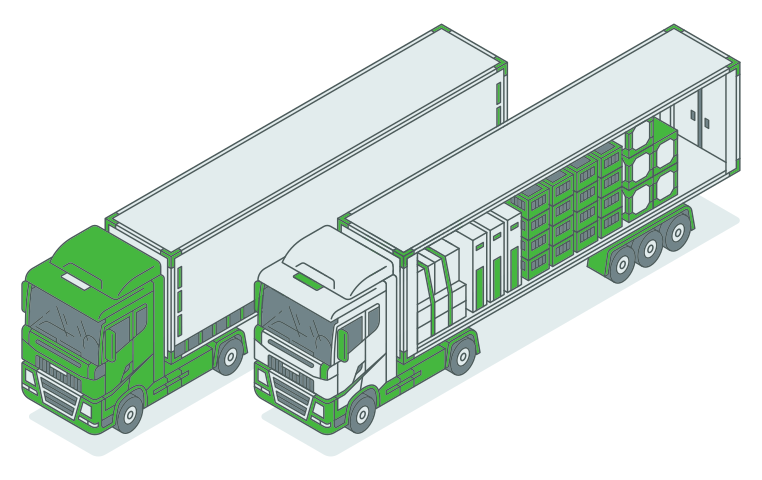
We offer regular part loads (LTL) in groupage transport to Serbia. Several consignments are bundled efficiently. Destinations such as Belgrade, Novi Sad or Niš are served regularly. On request we handle customs clearance for you under the delivery terms EXW, DAT, DAP or DDP.
Full Truckloads (FTL)
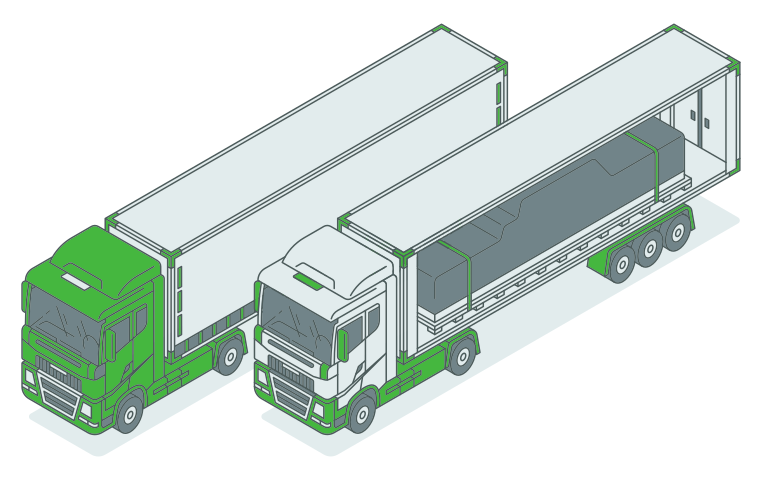
Our forwarder organises full loads (Full Truck Load) directly to Serbia. Your goods reach the consignee directly, without transshipment. As an option we offer full customs clearance under the DDP procedure, including payment of the applicable customs duties.
Heavy and Oversized Transports
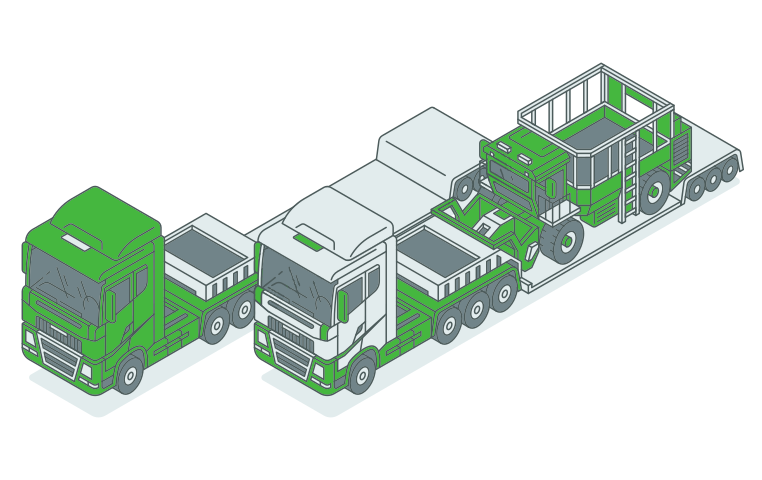
We carry out heavy and oversized transports to Serbia, for example for machinery, industrial plants or agricultural equipment. Our own specialised vehicles (low-loaders, mega-trailers and platform trailers) guarantee safe transport. We arrange the required permits; we do not, however, offer customs clearance.
Express Shipping
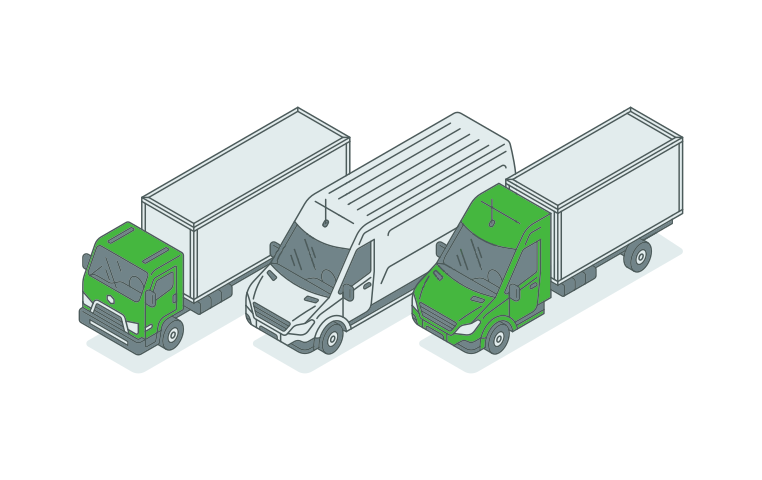
Our express service ensures fast delivery of urgent goods to Serbia. For this we have our own vans and Sprinter buses ready. On request we handle customs clearance for you under the DDP procedure, including payment of all duties and taxes.
Air Freight
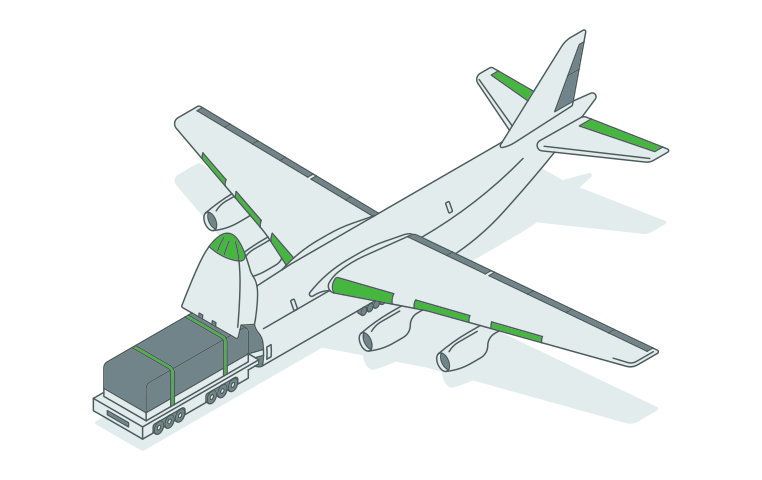
Our air-freight forwarder enables fast transports by plane to Serbia. On request we handle the complete customs clearance for you, including preparation of the required documents and payment of customs duties.
Project Transports
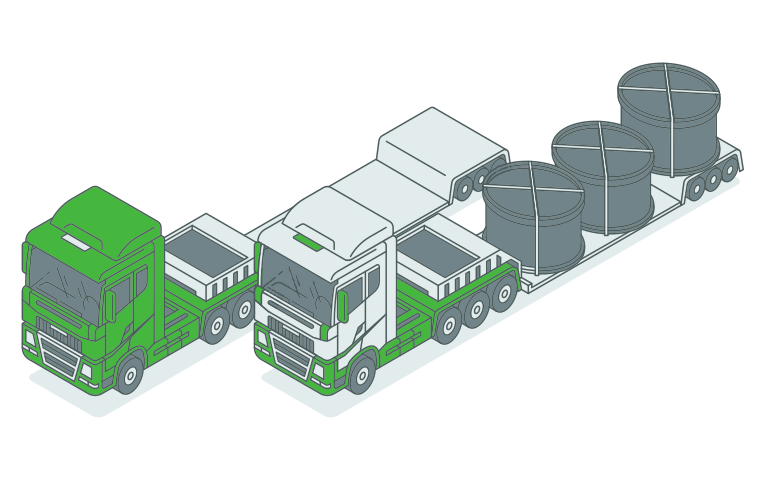
Our project forwarder plans and delivers individually tailored transports to Serbia. Depending on project scope we deploy jumbo trailers or platform trailers and prepare all documents and customs papers. We reliably accompany your freight to the final consignee.
High-Value Transports
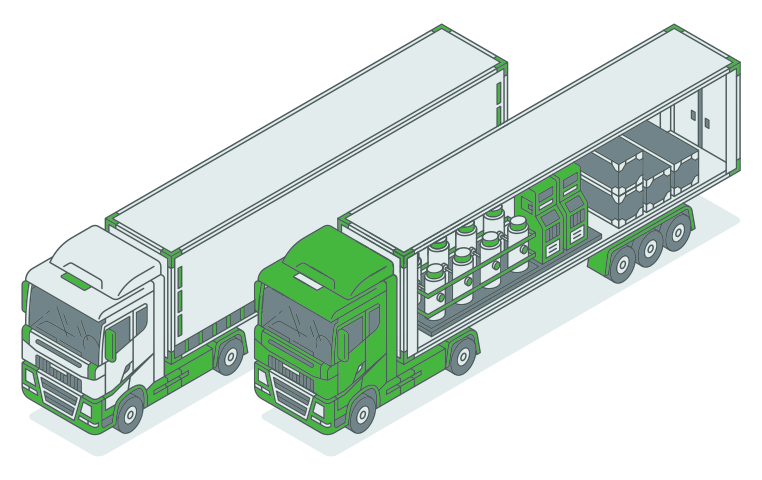
Our forwarder carries high-value goods safely in closed box trailers to Serbia. Cargo insurance up to EUR 10 million per vehicle unit is available as an option. We do not offer customs clearance for this service.
ADR Dangerous Goods Transports
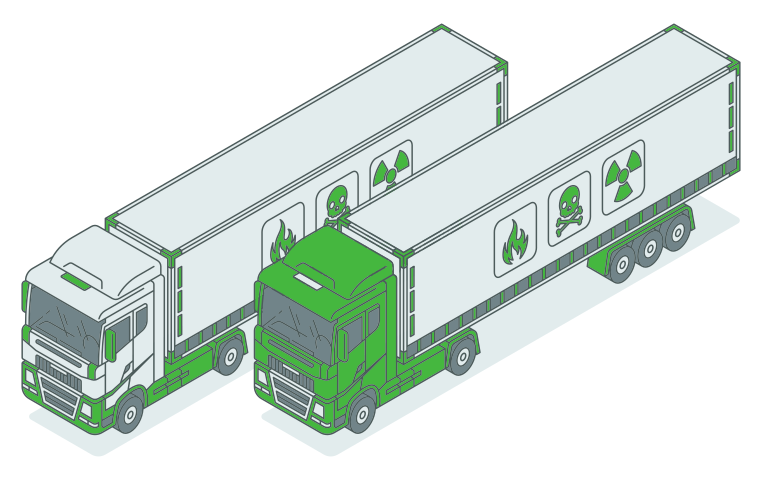
We offer ADR dangerous-goods transports (classes 1 to 6) to Serbia with specially equipped vehicles and trained personnel. Customs clearance is the responsibility of the principal.
Refrigerated and Frozen Transports
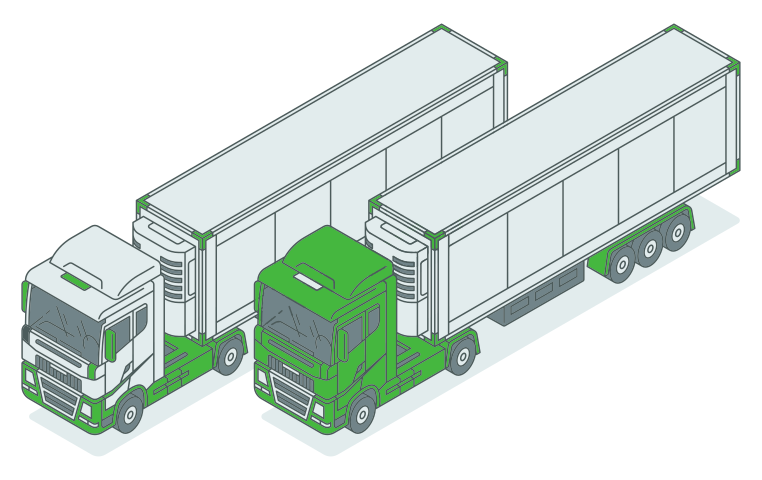
Our forwarder reliably carries out temperature-controlled transports to Serbia. We use modern Schmitz reefer trailers and guarantee constant temperatures from -18 °C to +10 °C throughout the entire transport route.
Trade Fair Transports
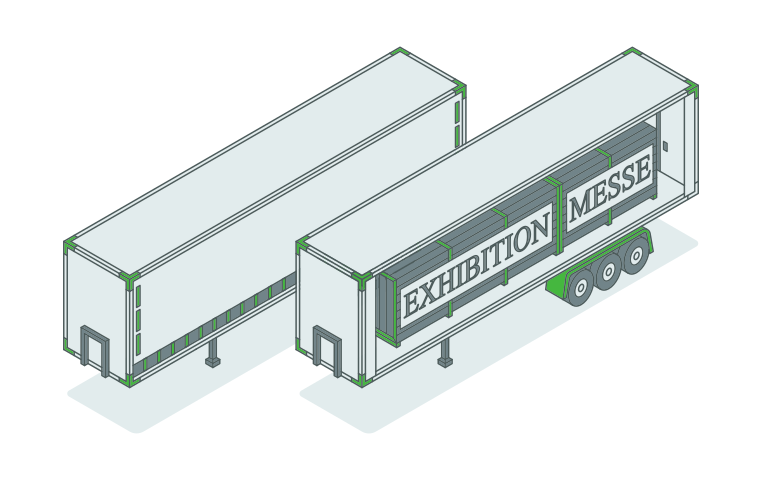
Our trade-fair forwarder reliably handles transports to trade fairs in Serbia, e.g. to Belgrade. We assist you with Carnet ATA and other customs formalities for temporary import. Additional services such as exhibition-stand assembly can be booked.
Free of charge and non-binding
We will get back to you the same day with a suitable freight quote for your Serbia transports – transparent and without obligation.
In brief: trade, transport and customs clearance – Serbia
What requirements help companies execute a transport to Serbia that is reliably scheduled and dependably managed?
A reliably scheduled and dependably managed transport to Serbia succeeds when supply chains are aligned early and an experienced forwarding agent for Serbia coordinates every operational detail precisely. Serbia is a key location for automotive manufacturing, mechanical engineering and industrial supplier chains, which is why stable and cleanly planned transport flows are crucial for companies. To ensure goods arrive without delay, they must be fully documented, correctly prepared and safely routed through the relevant customs offices. MARTIN Spedition handles all inspection and clearance processes in Germany, so that companies always have clarity about the shipment status. This way, every transport to Serbia is transparent, efficient and reliably feasible for varying volumes.
Import Serbia
We handle the full import customs clearance in Germany. This includes preparing all paperwork, liaising with the customs authorities and timely processing.
Export Serbia
We offer the complete export customs clearance in Germany. This includes preparing all paperwork, liaising with the customs authorities and timely processing.
Guides & news: Serbia

All destinations at a glance
Freight forwarder for part loads and full truckloads with clear processes, dedicated points of contact, and reliable customs clearance.
We organise transports efficiently, plannably, and on schedule – from collection to delivery.


Why us? Safe & on time
Request for business customers only
Serbia transports and logistics – briefly explained
Reliable deliveries to Serbia are predominantly carried out by forwarders specialised in international road transport. Parcel services do handle smaller shipments but quickly hit their limits with industrial goods, pallets, machinery or larger volumes.
Professional forwarders organise collection, export clearance, transit processes and delivery within Serbia. Companies with fixed truck departures, stable partner networks and clear transport chains operate particularly reliably. This allows delivery times to be planned precisely and delays to be kept to a minimum.
Small consignments can be sent via parcel services, although with limitations on weight, format or goods value. Companies need a forwarder that takes on the complete logistics process. This includes collection, export paperwork, transit procedures, transport organisation and delivery to the recipient.
Structured workflows and well-tuned transport networks allow commercial shipments to be transported to Serbia safely, in compliance with regulations and in good time.
For export to Serbia, full customs formalities apply, as the country does not belong to the EU. Relevant documents are, among others, the commercial invoice, packing list, customs tariff number, export declaration and – depending on the goods – proofs of origin or preference. Correct transit papers (T1) are also important if the goods are transported through further countries. Precise customs preparation accelerates border processes and avoids additional costs or delays.
The transit time depends on the mode of transport and route. Typical values are:
- Full truck load (FTL): 2–4 working days
- Part load (LTL): 3–6 working days
- General cargo: depending on trans-shipment points and network structure
Well-organised transport chains ensure stable and reliable delivery times, even with seasonal fluctuations or high load.
As Serbia is a landlocked country, road and air transport play the central role.
- Road transports are the most important solution, as they can be deployed flexibly, quickly and across the whole country.
- Air freight is used for time-critical or high-value goods, e.g. via Belgrade or Niš.
Depending on requirements, modes of transport can be combined in order to optimise costs, speed and sustainability.
Serbia has developed into an important production and supply location, particularly for mechanical engineering, automotive, electrical engineering and metalworking. The geographical position between the EU, the Balkans and Türkiye makes the country a logistics connection point.
Efficient transport and customs processes are decisive for companies to keep their supply chains stable and reliably supply their production locations.
The following documents are typically required for commercial transports:
- commercial invoice
- packing list
- customs tariff number and accurate goods description
- export declaration (EORI number required)
- where applicable, preferential proofs such as EUR.1 or a supplier’s declaration
- CMR consignment note
- transit document (T1) when passing through third countries
Carefully prepared documents significantly accelerate transport and customs clearance.
Transport costs depend on several factors:
- mode of transport (LTL, FTL, groupage)
- volume, weight or loading metres
- distance and transit route
- seasonal market trends and diesel price
- tolls and transit fees
- additional services such as customs clearance or notification
An accurate calculation takes both logistical and administrative parameters into account and enables transparent pricing.