

Kyrgyzstan Transports
MARTIN INTERNATIONALE SPEDITION
Your freight forwarder for international Kyrgyzstan transports
How do you ensure a smooth and reliably supervised transport solution to Kyrgyzstan?
A smooth and reliably supervised transport solution to Kyrgyzstan succeeds when the process is clearly structured and an experienced freight forwarder for Kyrgyzstan oversees the entire process. That is exactly what we do: dedicated points of contact, fast responses, and regularly organised Kyrgyzstan transports so that your goods arrive in Kyrgyzstan without detours and within plannable transit times.
For larger shipments we set up direct full truckloads that run to the recipient without reloading. Smaller delivery volumes are consolidated into economical part loads – from pallet shipping to Kyrgyzstan to single-pallet deliveries. This keeps your Kyrgyzstan transports transparent, flexible, and calculable. Many of our customers opt for truck transports to Kyrgyzstan because they have goods, equipment, or industrial cargo moved safely and efficiently.
When time is critical, we provide an express vehicle exclusively for your shipment. For sensitive or oversized goods, we take over the full organisation including permits, route planning, and on-site coordination. Our logistics for Kyrgyzstan ensure that every step remains traceable and your delivery arrives at the destination reliably and on time.
Our range of services for Kyrgyzstan
Part Loads and Groupage
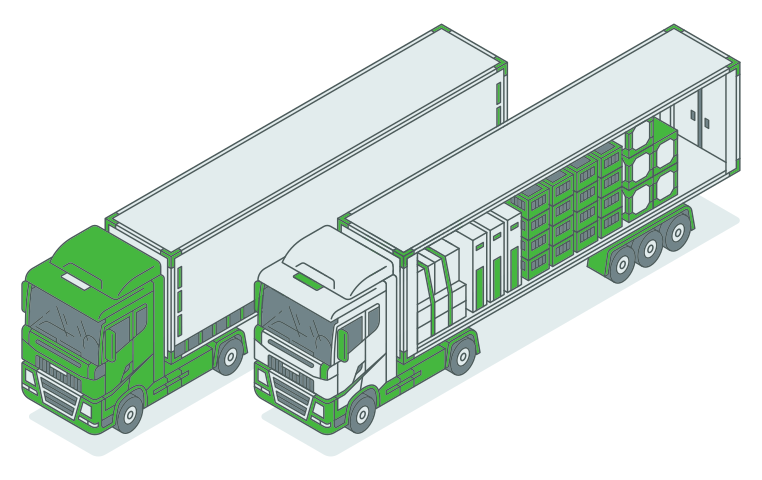
We offer regular part loads (LTL) in groupage transport to Kyrgyzstan. Several consignments are bundled efficiently. Popular destinations such as Bishkek or Osh are served regularly. On request we handle customs clearance for you (EXW, DAT, DAP or DDP).
Full Truckloads (FTL)
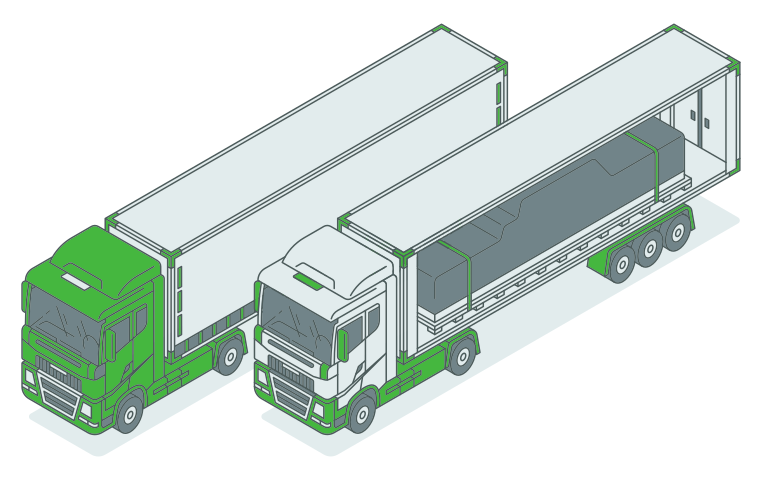
Our forwarder offers full loads (Full Truck Load) directly to Kyrgyzstan. Your goods reach the consignee directly, without transshipment. As an option we handle the full customs clearance under the DDP procedure for you, including payment of all applicable customs duties.
Heavy and Oversized Transports
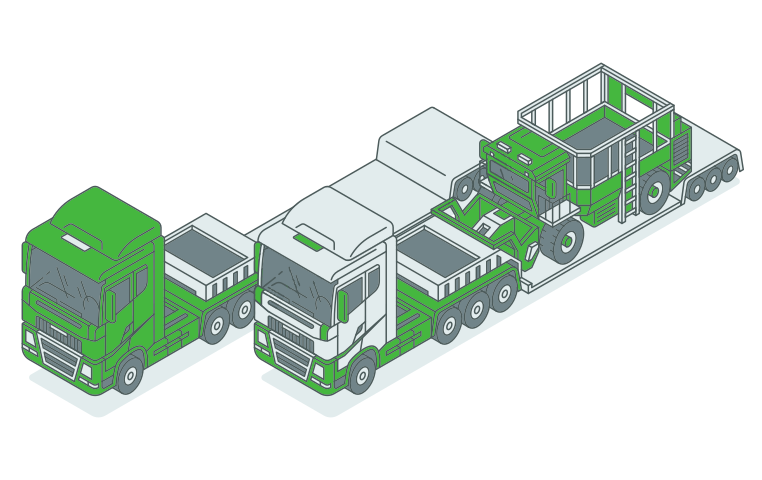
We carry out heavy and oversized transports to Kyrgyzstan, e.g. for agricultural machinery or industrial plants. Our own low-loaders, mega-trailers and platform trailers ensure safe transport. We take care of the necessary permits; we do not offer customs clearance.
Express Shipping
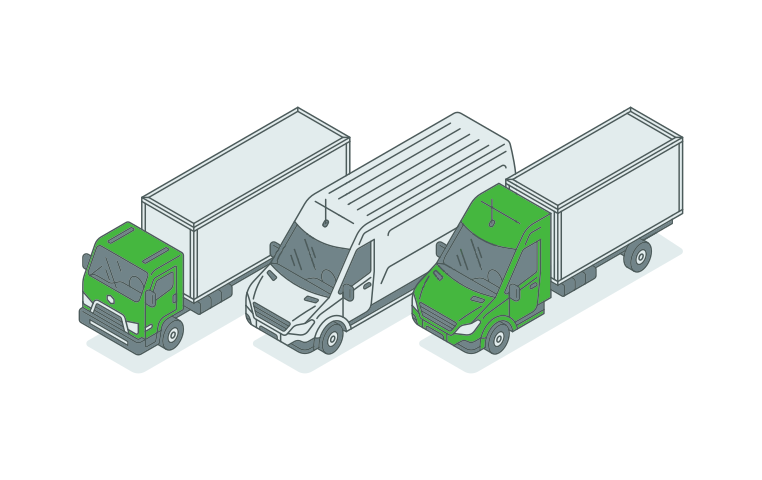
Our freight forwarder enables fast express shipping to Kyrgyzstan using our own vans and Sprinter buses. On request we also offer the DDP procedure, where we handle the entire customs clearance including payment of all duties.
Air Freight
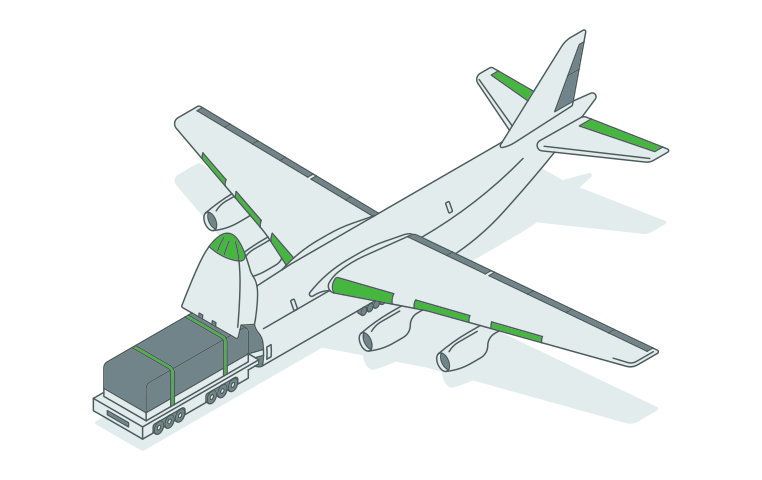
Our air-freight forwarder delivers fast transports to Kyrgyzstan by plane. On request we handle the complete customs clearance, including preparation of all customs papers and payment of customs duties.
Project Transports
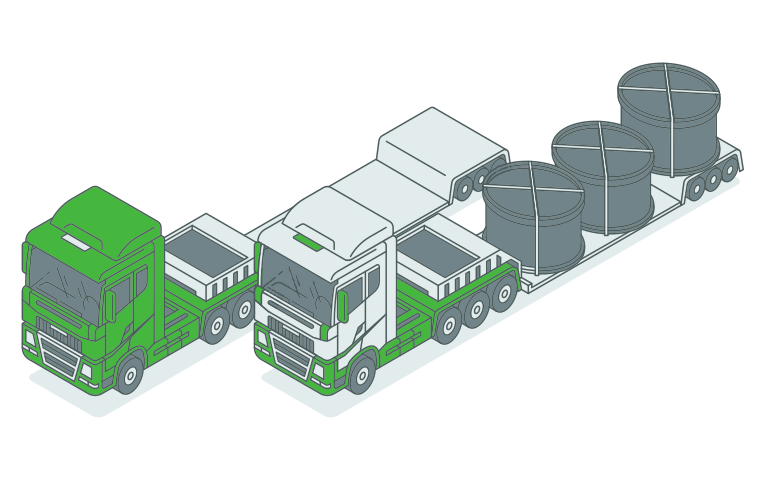
Our project forwarder organises bespoke transports to Kyrgyzstan. Depending on scope we deploy jumbo trailers or platform trailers and handle all documentation and customs formalities through to the final delivery.
High-Value Transports
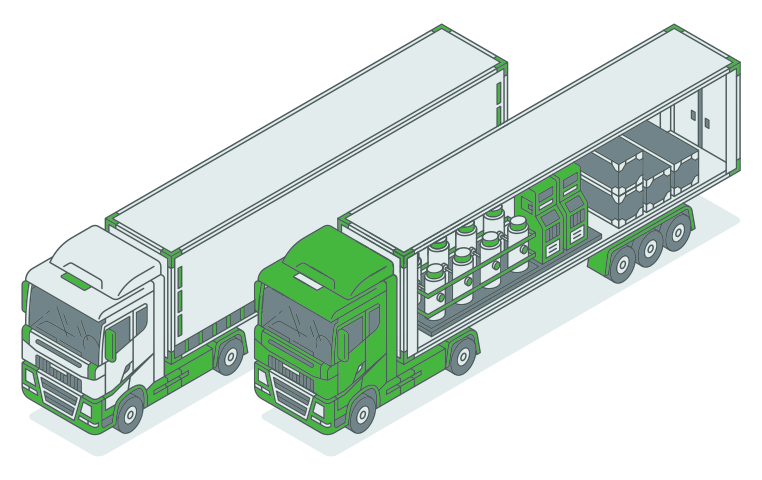
Our forwarder transports high-value goods safely in closed box trailers to Kyrgyzstan. We optionally offer cargo insurance up to EUR 10 million per vehicle unit. Customs clearance here is the responsibility of the principal.
ADR Dangerous Goods Transports
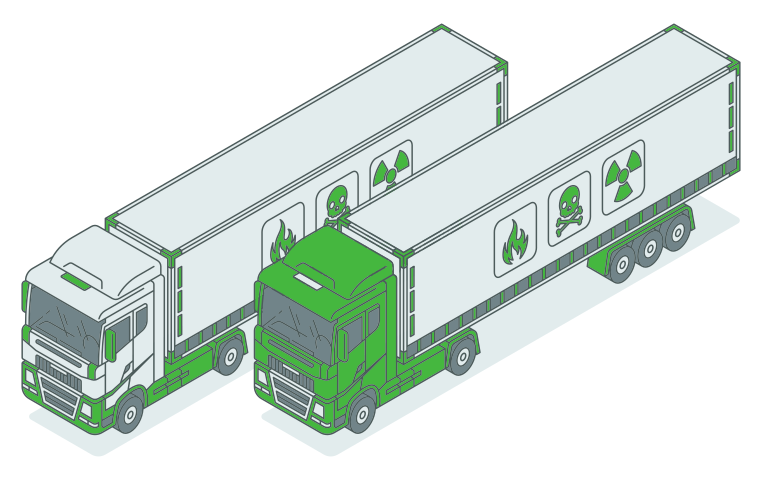
We offer ADR dangerous-goods transports (classes 1 to 6) to Kyrgyzstan with specially equipped vehicles and trained personnel. Customs clearance is the responsibility of the principal.
Refrigerated and Frozen Transports
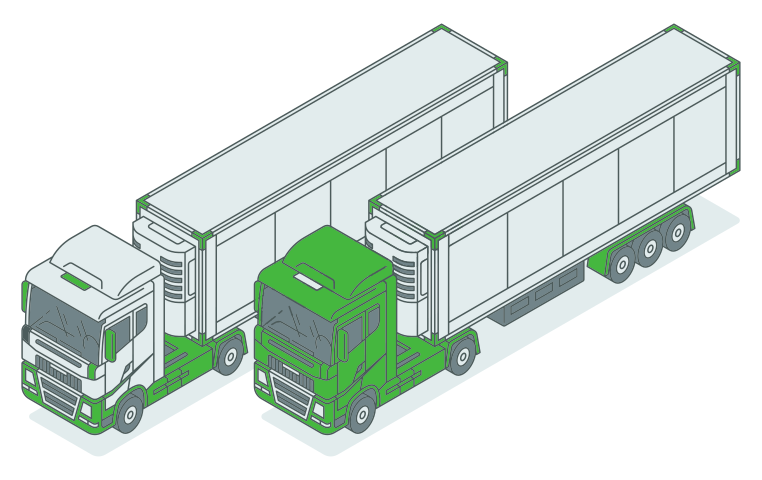
Our forwarder carries out refrigerated and frozen transports to Kyrgyzstan with modern Schmitz reefer trailers. We guarantee constant temperatures from -18 °C to +10 °C over the entire transport route.
Enclosed Car Transports
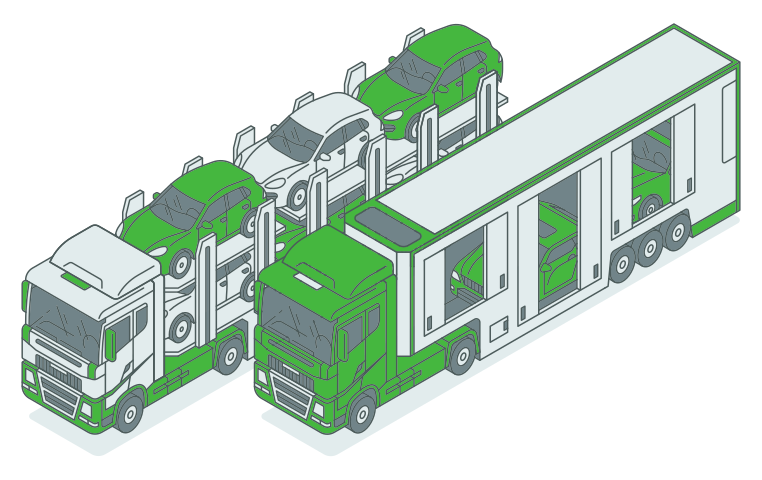
We offer enclosed transports of high-value vehicles such as sports cars, prototypes or classic cars to Kyrgyzstan. The transport is carried out safely and discreetly. Customs clearance is the responsibility of the principal.
Trade Fair Transports

Our trade-fair forwarder reliably transports your exhibition goods to Kyrgyzstan, e.g. to Bishkek. We assist you with Carnet ATA and other customs formalities. Additional services such as exhibition-stand assembly are also available.
Business and Private Removals
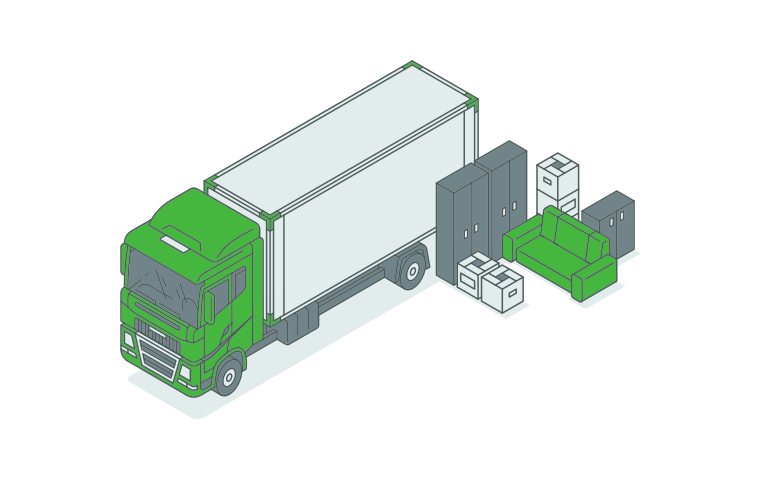
Our forwarder professionally and reliably handles corporate and private removals to Kyrgyzstan. We load your inventory directly at the origin and transport it safely to the destination. Additional services such as on-site assembly can be booked individually.
Free of charge and non-binding
We will get back to you the same day with a suitable freight quote for your Kyrgyzstan transports – transparent and without obligation.
In brief: trade, transport and customs clearance – Kyrgyzstan
What conditions help companies deliver a transport to Kyrgyzstan that is stably managed and traceably planned?
A stably managed and traceably planned transport to Kyrgyzstan succeeds when companies factor in the regional handover points, the mountainous topography and the customs requirements early, and a specialised forwarding agent for Kyrgyzstan coordinates every step. The country is a relevant market for machinery, technical plant and industrial components, which makes reliable transport chains particularly important. To ensure that deliveries proceed without delay, goods must be cleanly documented and routed through the appropriate border points. MARTIN Spedition handles all inspection and clearance processes in Germany so operations stay consistent. This way, every transport to Kyrgyzstan is transparent, predictable and reliably managed even on demanding routes.
Import Kyrgyzstan
For imports from Kyrgyzstan we handle the full customs clearance in Germany. We check all documents for accuracy, prepare the import papers and accompany the process through to swift release by the authorities.
Export Kyrgyzstan
For exports to Kyrgyzstan we take care of all export formalities. Our team prepares the required documents, coordinates the customs declaration and ensures legally compliant, on-time processing.
International Transports
Freight forwarder for part loads and full truckloads with clear processes, dedicated points of contact, and reliable customs clearance.
We organise transports efficiently, plannably, and on schedule – from collection to delivery.


Why us? Safe & on time
Request for business customers only
Kyrgyzstan transports and logistics – briefly explained
Transport services to Kyrgyzstan are predominantly offered by international forwarders specialised in Central Asia transports. These companies have experience with long transit distances, border processes and country-specific regulations along the usual routes via Kazakhstan or Uzbekistan.
Both large logistics networks and specialised mid-sized providers regularly serve this relation. We also carry out transports to Kyrgyzstan – discreetly noted – and have experience in handling FTL, LTL and project-based shipments to this region. What is important is that the chosen provider has stable partner structures, regional knowledge and reliable document handling.
The most frequently used mode of transport is road traffic, as it allows door-to-door deliveries and is suitable for a wide range of goods types. For urgent or particularly high-value shipments, air freight via the airports of Bishkek or Osh is a good option.
For heavy or long-running delivery programmes, intermodal solutions can make sense, for example a combination of road and rail via Kazakhstan or Uzbekistan. The best transport solution depends on the required transit time, budget, type of goods and the level of safety needed.
The costs vary depending on the mode of transport, dimensions, weight, loading metres, transit route and seasonal market development. Transit fees, tolls, possible waiting times at borders, customs costs and fuel surcharges are added.
Full truck loads can usually be calculated more clearly, while part loads depend more strongly on network structures. As Kyrgyzstan is a third country and several non-EU countries have to be crossed, forwarders produce individual quotations on the basis of the specific shipment data. A precise cost calculation is only possible when all relevant details such as type of goods, packaging, dimensions and delivery address are available.
For shipments to Kyrgyzstan, the following modes of transport are mainly used:
- Road transports: For FTL, LTL and project-related loads – the most frequent solution.
- Air freight: Suitable for time-critical or high-value goods; regularly used via Bishkek.
- Intermodal/rail combinations: Particularly suitable for larger or heavier shipments; often run via Kazakhstan.
Because of the topography and geopolitical situation, routes are regularly adapted to seasonal and operational conditions. A combination of different transport modes is therefore not uncommon.
The transit time depends on the route, transit countries, border waiting times and seasonal conditions. Common time corridors are:
Full truck load (FTL): 10–20 working days
Part load (LTL): 14–25 working days
Air freight: approx. 1–4 days depending on departure point
Transports via Kazakhstan are considered relatively stable, while routes via Uzbekistan or the southern corridor can vary depending on season. Due to the geographical location of Kyrgyzstan, additional delays can occur in mountain regions.
For export to Kyrgyzstan, third-country formalities are required. These include:
- commercial invoice
- packing list
- customs tariff numbers (HS code)
- export declaration (ATLAS)
- CMR consignment note
- if applicable proofs of origin or conformity certificates
As the route runs through several non-EU states, a T1 transit document is often required. Depending on the goods, further documents such as technical certificates or permits may be required. Complete and correct paperwork is decisive for a smooth workflow.
Many international forwarders provide digital enquiry or booking forms through which companies enter transport data and receive an individual quote.
Enquiries for Kyrgyzstan can also be submitted through our transport enquiry form on our website – mentioned discreetly, without promotional emphasis.
It is important to provide the forwarder with complete data: dimensions, weights, type of goods, pickup location, destination address and the desired transit time. This makes quote preparation faster and more accurate.
Since Kyrgyzstan is not an EU member, full export and import formalities apply. Required are an accurate goods description, HS codes, commercial invoice, packing list, export declaration and – depending on the product group – proofs of origin or technical certificates.
For transit through other non-EU countries, a T1 transit procedure is normally used, which accompanies the goods to the Kyrgyz border.
In Kyrgyzstan itself, customs clearance follows national customs law. Depending on the goods, additional requirements, registrations or inspections may be necessary. Clean and complete documentation is essential to avoid delays and additional costs.