

Russia Transports
MARTIN INTERNATIONALE SPEDITION
Your freight forwarder for international Russia transports
How do you organise a sanctions-compliant and reliably managed transport to Russia?
A sanctions-compliant and reliably managed transport to Russia succeeds when all rules are strictly observed and an experienced freight forwarder for Russia oversees the entire process. That is exactly what we do: dedicated points of contact, fast responses, and continuously monitored Russia transports so that your goods arrive safely and without unnecessary delays.
We exclusively transport goods that are not subject to sanctions. These include, among others, medical technology, selected food products, and beer or other permitted alcoholic beverages. For these product groups, we organise direct truck transports to Russia or consolidate smaller shipments into economical part loads – from pallet shipping to Russia to single-pallet deliveries. This keeps your Russia transports transparent, calculable, and traceable at every stage.
When time is critical, we provide a dedicated express vehicle solely for your shipment. For oversized or sensitive goods, we take over the full organisation including permits, routing, and on-site coordination. Our logistics for Russia ensure that every step remains documented and your permitted goods arrive reliably and on time.
Our range of services for Russia
Part Loads and Groupage
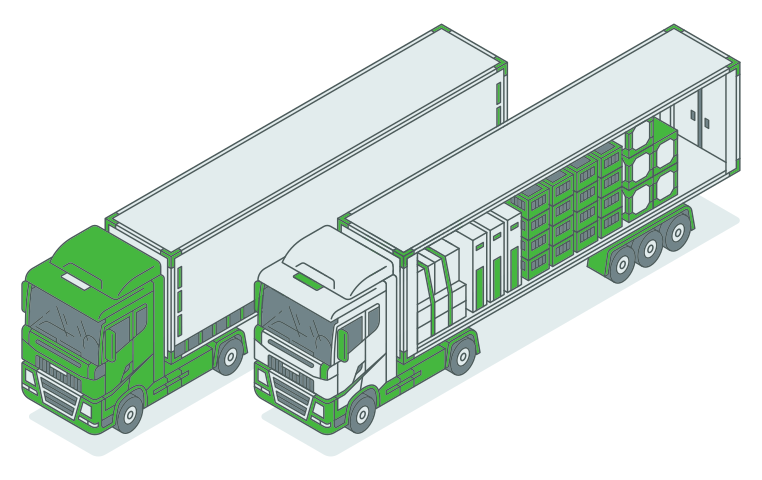
We offer regular part loads (LTL) in groupage transport to Russia. Several consignments are bundled efficiently. Destinations such as Moscow, St Petersburg or Yekaterinburg are served on a regular basis. On request we also handle customs clearance for you (EXW, DAT, DAP or DDP).
Full Truckloads (FTL)
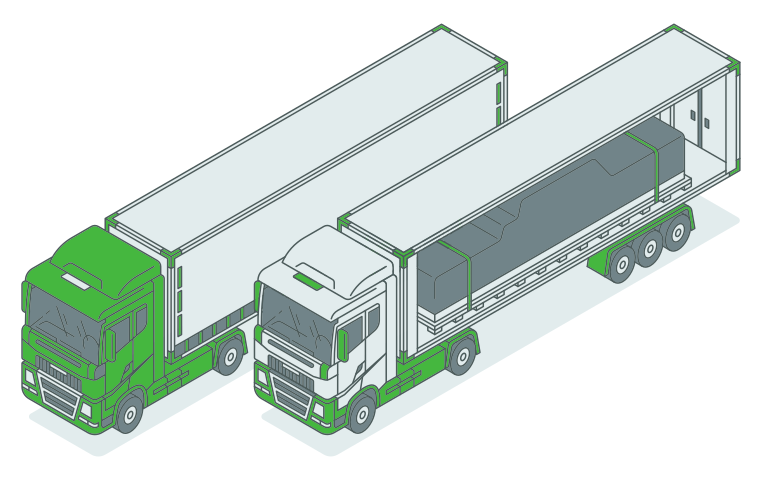
Our forwarder offers full loads (Full Truck Load) directly to Russia. Your goods reach the consignee without transshipment. As an option we offer full customs clearance under the DDP procedure, including payment of the customs duties.
Heavy and Oversized Transports
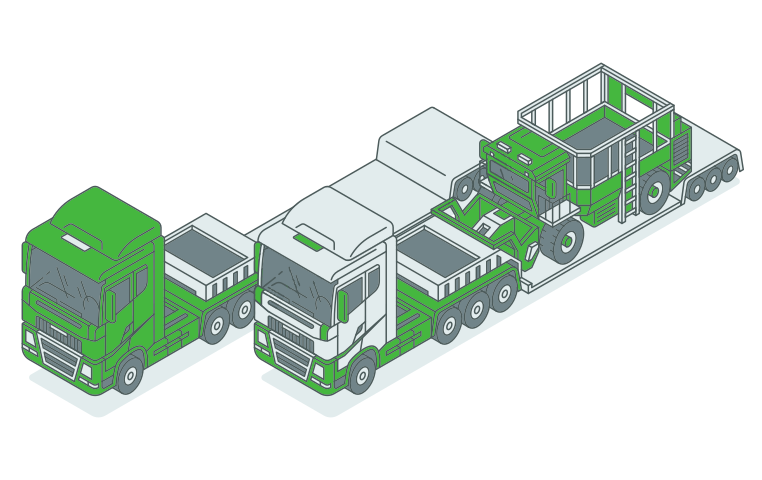
We carry out heavy and oversized transports to Russia, for example for agricultural machinery, industrial plants or components. Our specialised vehicles such as low-loaders, mega-trailers and platform trailers are ready to go. We arrange the necessary permits. We do not, however, offer customs clearance.
Express Shipping
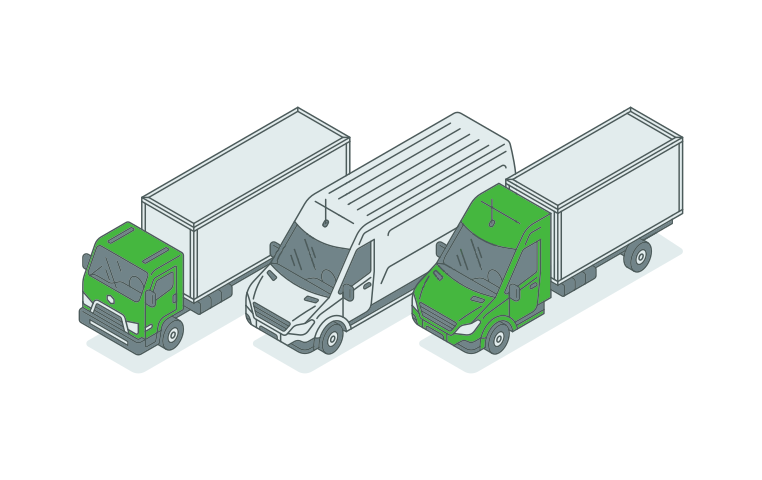
Our freight forwarder offers fast express shipping to Russia using our own vans and Sprinter buses. Destinations such as Moscow or St Petersburg are reached particularly quickly. On request we also handle customs clearance under the DDP procedure, including payment of all duties and taxes.
Air Freight
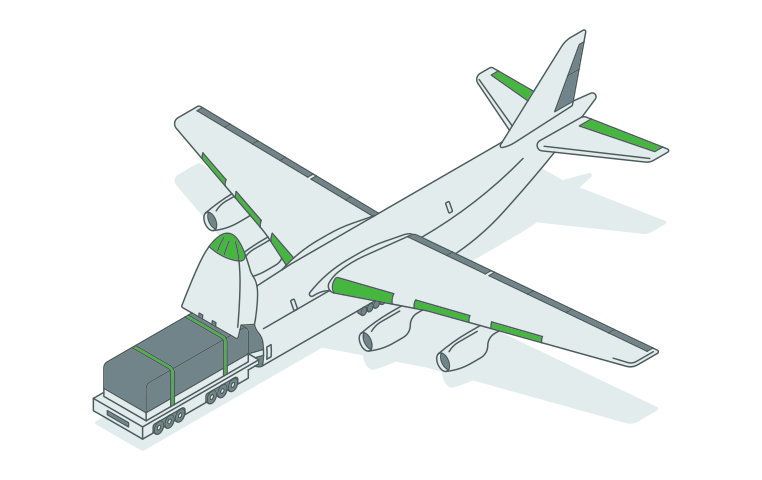
Our air-freight forwarder delivers fast transports to Russia by plane. On request we handle the complete customs clearance, including preparation of all necessary documents and payment of customs duties.
Project Transports
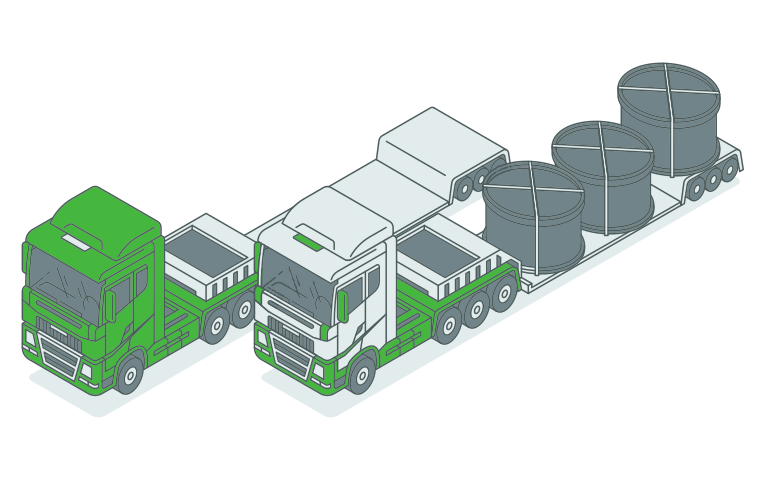
Our project forwarder plans and delivers bespoke transports to Russia. Depending on scope we deploy jumbo trailers or platform trailers and handle all documentation and customs formalities through to the final delivery.
High-Value Transports
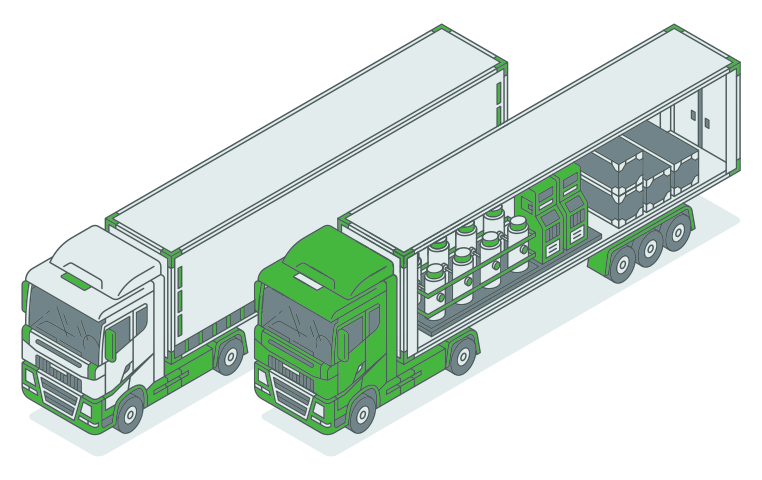
Our forwarder transports high-value goods safely in closed box trailers to Russia. We optionally offer cargo insurance up to EUR 10 million per vehicle unit. Customs clearance is not offered for this service.
ADR Dangerous Goods Transports
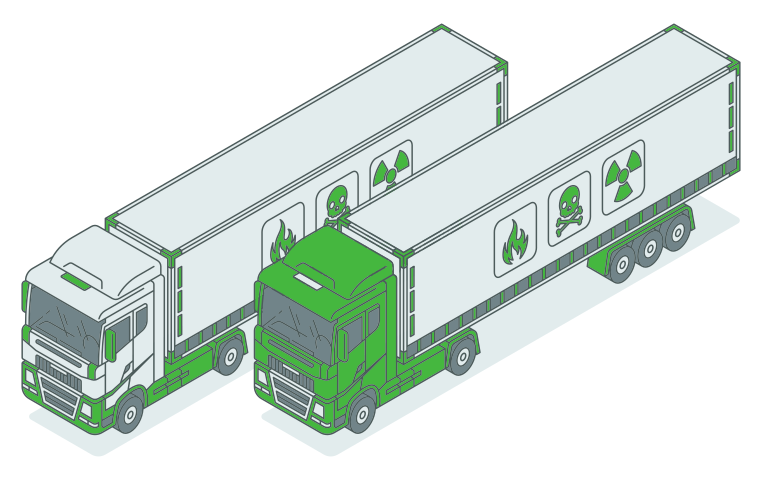
We offer ADR dangerous-goods transports (classes 1 to 6) to Russia with specially equipped vehicles and trained personnel. Customs clearance is the responsibility of the principal.
Refrigerated and Frozen Transports
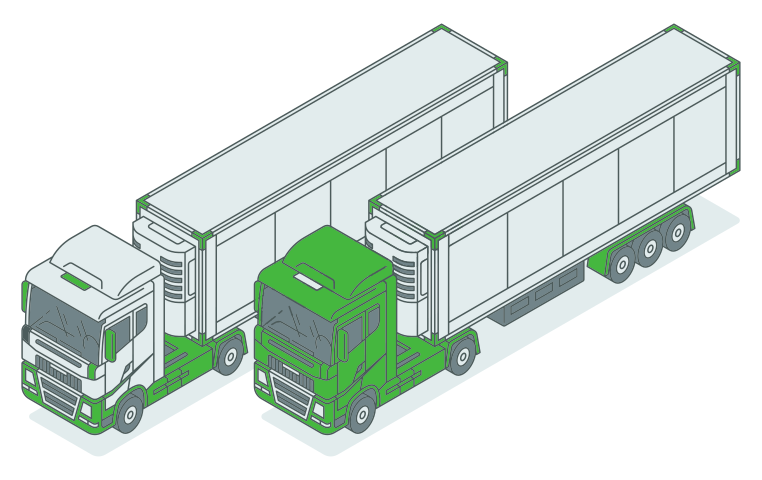
Our forwarder carries out refrigerated and frozen transports to Russia with modern Schmitz reefer trailers. We guarantee constant temperatures from -18 °C to +10 °C throughout the entire carriage.
Enclosed Car Transports
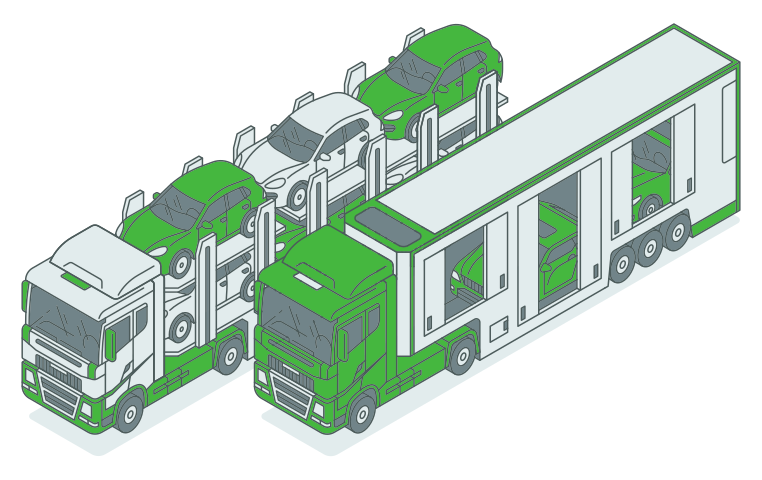
We offer enclosed transports of high-value vehicles such as sports cars, prototypes or classic cars to Russia. The transport is carried out safely and discreetly in closed trailers. Customs clearance is the responsibility of the principal.
Trade Fair Transports
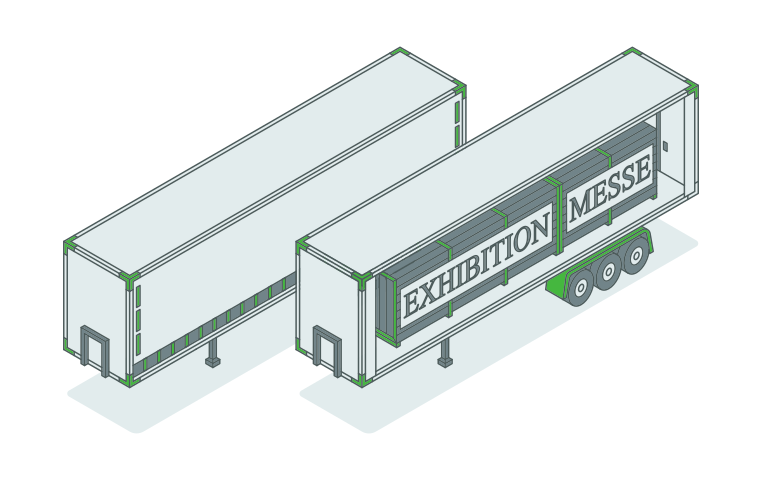
Our trade-fair forwarder reliably transports your fair and exhibition goods to Russia, for example to Moscow or St Petersburg. We assist you with Carnet ATA and other customs formalities for temporary imports. Additional services such as exhibition-stand assembly are also available.
Business and Private Removals
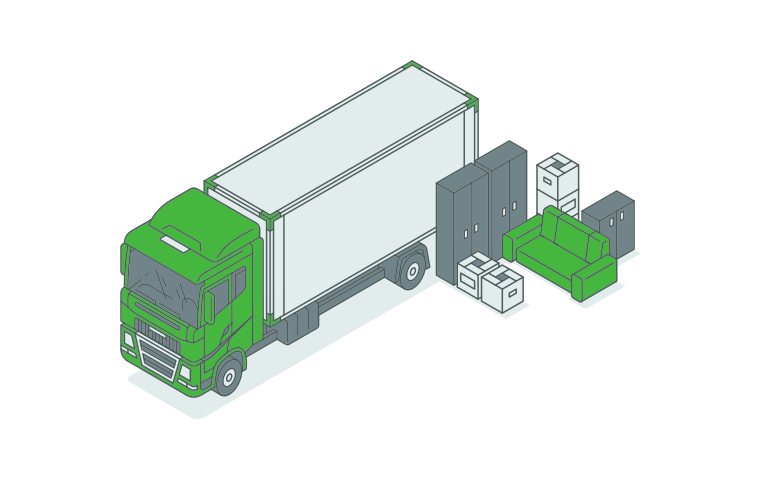
Our forwarder handles your corporate or private removal to Russia professionally and reliably. We load your inventory directly at the origin and transport it safely to the destination. Additional services such as on-site assembly can be booked individually.
Free of charge and non-binding
We will get back to you the same day with a suitable freight quote for your Russia transports – transparent and without obligation.
In brief: trade, transport and customs clearance – Russia
What conditions must be met to make a transport to Russia possible that is legally compliant and clearly documented?
A legally compliant and clearly documented transport to Russia succeeds when only permitted goods are shipped and a specialised forwarding agent for Russia prepares every required record precisely. Under current regulations, only certain goods such as medical equipment, food and selected consumer or convenience items may be transported, which is why careful planning is indispensable. It is crucial that every delivery is fully documented and consistently routed through the relevant customs offices. MARTIN Spedition handles all inspection, coordination and clearance processes in Germany so that operations remain seamlessly traceable. This way, every transport to Russia is legally secure, transparent and reliably executed.
Import Russia
For imports from Russia we handle the entire processing at the German customs offices. We check your documents, prepare the import declaration and accompany the process through to customs release – safely, efficiently and in compliance with the rules.
Export Russia
For exports to Russia we take care of the full customs clearance in Germany. Our team prepares the export papers, files the delivery with customs and coordinates all further steps up to the approved loading.
International Transports
Freight forwarder for part loads and full truckloads with clear processes, dedicated points of contact, and reliable customs clearance.
We organise transports efficiently, plannably, and on schedule – from collection to delivery.


Why us? Safe & on time
Request for business customers only
Russia transports and logistics – briefly explained
Reliable deliveries to Russia are predominantly carried out by international forwarding companies that have many years of experience with Eastern European and third-country transports. These include both large logistics networks and specialised mid-sized providers running regular routes towards Russia. Stable partner structures, knowledge of Russian customs processes and route-specific expertise in transit countries such as Belarus or the Baltic states are essential.
Companies like ours continue to handle transports to Russia, provided the goods category is permissible and all sanctions are observed. Careful planning that takes into account current regulations and logistical framework conditions is decisive.
Transport costs vary considerably depending on the relation, destination region, mode of transport, goods, seasonal demand and the number of border crossings. Full truck loads (FTL) can usually be calculated more clearly, while part loads (LTL) fluctuate more, as they depend on network structures and trans-shipment points.
Typical additional costs such as tolls, transit costs, customs clearance fees, fuel surcharges or waiting times at border crossings also apply. The longer the route and the more complex the handling, the higher the total costs. A robust price statement therefore always requires a detailed enquiry with exact shipment data.
The most important transport mode for Russia is road traffic, as it allows flexible collection, direct delivery and comparatively short transit times. Full truck loads are ideal for machinery, production goods or palletised items, while part loads represent a more economical solution for smaller quantities.
For urgent or high-value goods, air freight is used in exceptional cases, e.g. via airports such as Moscow or St. Petersburg. Intermodal concepts that combine truck and rail can make sense on certain routes, particularly for long-term or high-volume delivery programmes. Ultimately the choice of transport mode depends on time required, goods value and the required process security.
The transit time depends heavily on the chosen route, the destination region and the border situation. The following benchmarks apply in practice:
- Western and northern Russia (e.g. St. Petersburg, Moscow): 4–8 working days
- Central Russia: 7–12 working days
- Siberia / Urals region: significantly longer, depending on the route 14–25+ working days
Full truck loads reach destinations faster than part loads, as no additional trans-shipment is required. Waiting times at the external borders, security checks and customs processes can affect the actual transit time. Reputable providers therefore work with transit-time corridors instead of fixed guarantees.
As Russia is not an EU member, full export formalities are necessary. These include the export declaration, correct goods description, customs tariff numbers, commercial invoice, packing list and, if applicable, proofs of origin. Many transports additionally require transit papers (e.g. T1) when the route runs through non-EU countries.
For import to Russia, additional national requirements such as certificates, technical evidence or registrations apply, which can vary depending on goods category. Faulty or incomplete papers quickly lead to delays, additional checks or storage costs at the border. Clean document preparation is therefore particularly important for Russia transports.
Many forwarders today offer digital booking options or online enquiry forms. The workflow is mostly straightforward: companies enter their shipment data such as place of collection, delivery address, dimensions, weight and type of goods and then receive an individual quotation. Such an enquiry can also be submitted on our website without being prominently advertised.
For a binding booking, forwarders often need additional information such as customs information, desired transit time or special requirements. After acceptance of the quotation, the forwarder takes on the planning of the transport, the dispatching of the vehicle and the preparation of the necessary documents.
Contact details of forwarders experienced in Russia are usually available on their websites, in logistics directories, industry portals or online databases for international transports. Many providers maintain dedicated contacts for Eastern Europe and Russia transports, reachable by phone or e-mail.
Companies like ours likewise provide contact channels through which Russia-related enquiries can be handled professionally and discreetly. What matters when selecting a provider is demonstrable experience with customs procedures, transit routes and Russian logistics structures.
Specialised logistics providers for Russia have extensive knowledge of regional infrastructure, customs regulations and operational specifics on the transit routes. These providers work with stable partners in Russia, operate secure transport chains and are familiar with the requirements of industrial customers of all kinds.
In addition to international providers, there are mid-sized forwarders that have been running transports to Russia for years. We are among the companies with the corresponding expertise and regularly coordinate deliveries – always within the applicable rules and without promotional emphasis.
What matters when selecting a service provider is experience, reliability, transparent communication and the ability to manage even complex operations safely.