

Norway Transports
MARTIN INTERNATIONALE SPEDITION
Your freight forwarder for international Norway transports
Which points should companies consider when planning a transport to Norway and having to deal with demanding routes and changing weather conditions?
A reliable transport to Norway starts by realistically assessing the particular combination of topography, climate, and long driving distances. Many routes lead through tunnels, coastal sections, or mountain stretches that are passable to varying degrees depending on the season. Companies should therefore clarify early which transport mode their project really needs: a direct machinery transport makes sense when equipment must arrive at remote industrial or energy locations without interruption. A structured pallet shipment is suitable for regular volumes, while a flexible road freight transport helps when dates need to be adjusted at short notice. A part load is particularly worthwhile when different collection points are combined or changing volumes are bundled efficiently.
An experienced freight forwarder for Norway knows the seasonal specifics, is aware of which routes are reliable, and can realistically assess where additional time buffers are needed. This keeps goods shipping to Norway plannable, understandable, and stable even when external conditions become more demanding.
Our range of services for Norway
Part loads and groupage
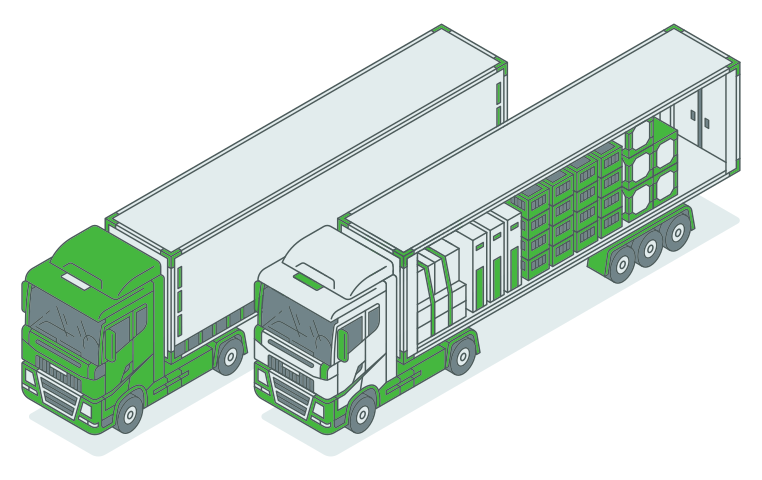
Our part load to Norway is the right solution for smaller B2B consignments. With consolidated routes and customs preparation we deliver efficiently to all regions, including by ferry or bridge.
Our part load to Norway is the right solution for smaller B2B consignments. With consolidated routes and customs preparation we deliver efficiently to all regions, including by ferry or bridge.
Full truckloads (FTL)
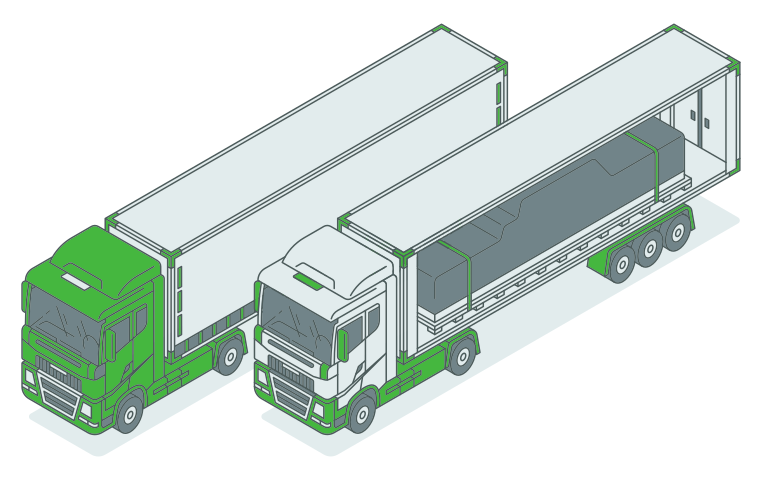
The full load to Norway is carried out directly without transshipment – ideal for large delivery volumes with fixed deadlines. We handle the entire planning including border formalities and transit-time monitoring.
The full load to Norway is carried out directly without transshipment – ideal for large delivery volumes with fixed deadlines. We handle the entire planning including border formalities and transit-time monitoring.
Heavy and oversized transports
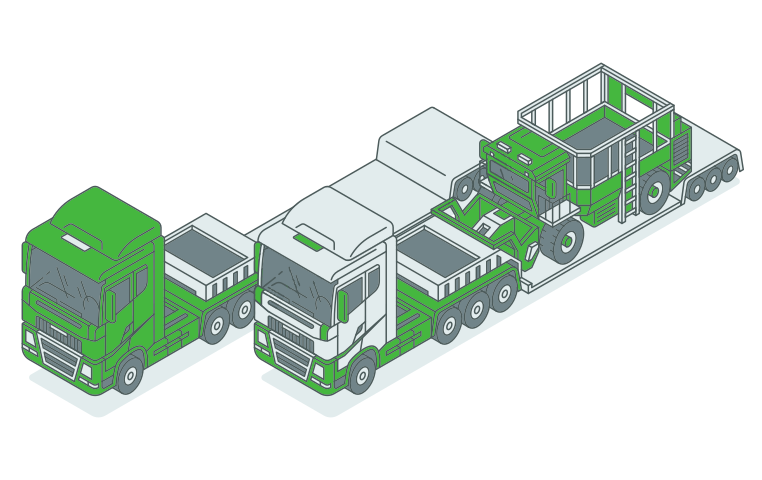
A heavy transport to Norway requires technical know-how. We offer route analysis, ferry coordination and vehicle technology for oversized machinery or industrial components.
A heavy transport to Norway requires technical know-how. We offer route analysis, ferry coordination and vehicle technology for oversized machinery or industrial components.
Express shipping
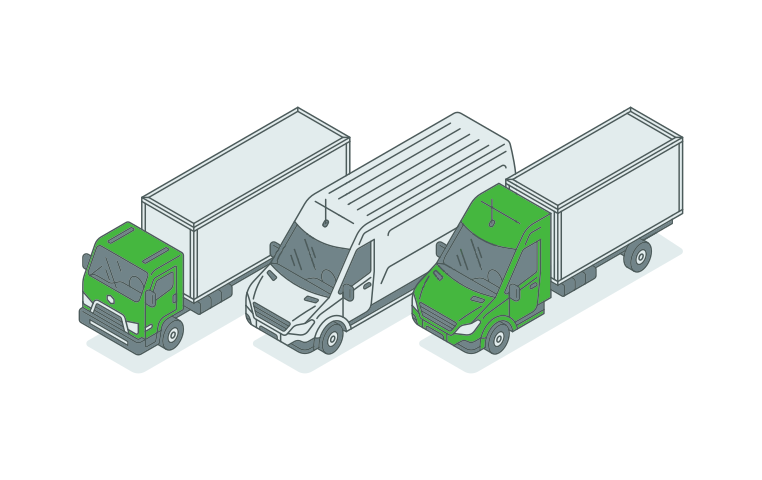
Our express shipping to Norway delivers your urgent consignments on time – even across borders. Direct journey, immediate loading and a transparent ETA are standard with us.
Our express shipping to Norway delivers your urgent consignments on time – even across borders. Direct journey, immediate loading and a transparent ETA are standard with us.
Project transports
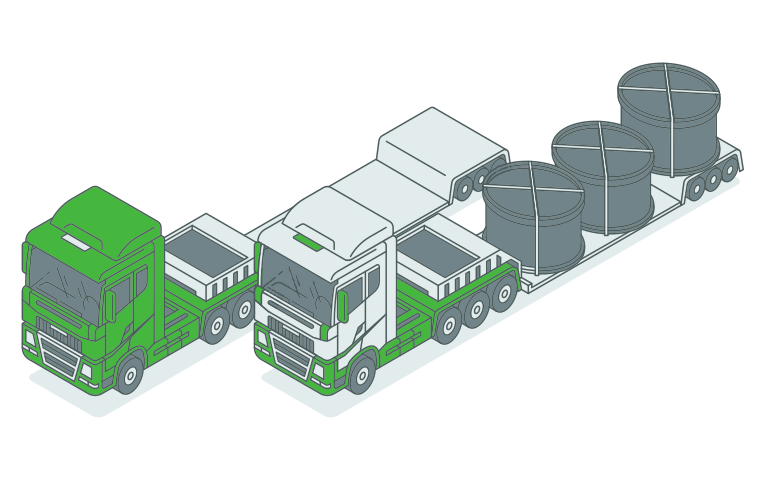
We plan your project transports to Norway with the utmost care – for construction, energy, industry or serial deliveries. Schedule control, packaging and specialised vehicles included.
We plan your project transports to Norway with the utmost care – for construction, energy, industry or serial deliveries. Schedule control, packaging and specialised vehicles included.
ADR dangerous goods transports
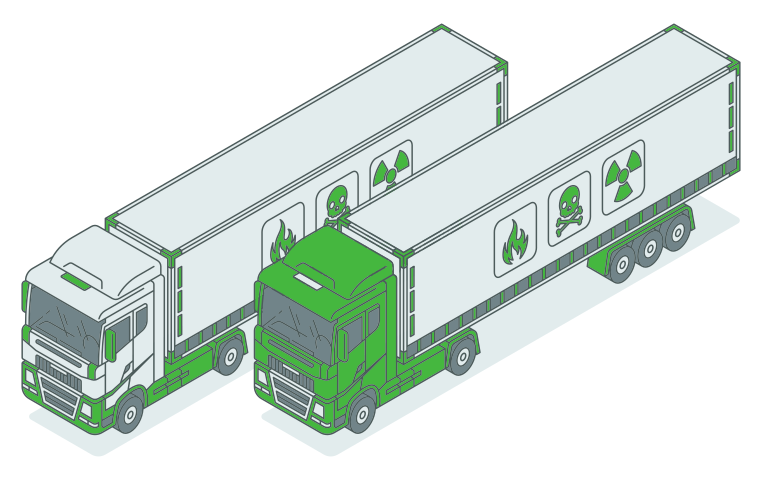
A dangerous-goods transport to Norway is carried out in line with ADR using certified vehicles, export accompanying documents and digital route monitoring for chemical and technical dangerous goods.
A dangerous-goods transport to Norway is carried out in line with ADR using certified vehicles, export accompanying documents and digital route monitoring for chemical and technical dangerous goods.
Refrigerated and frozen transports
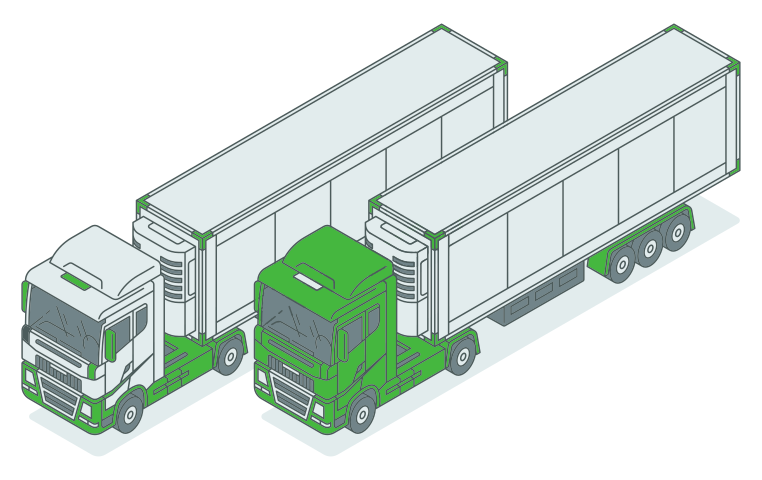
Our refrigerated transports to Norway safeguard pharmaceutical and industrial refrigerated goods with validated technology, real-time temperature monitoring and hygienic handling – even with combined ferry logistics.
Our refrigerated transports to Norway safeguard pharmaceutical and industrial refrigerated goods with validated technology, real-time temperature monitoring and hygienic handling – even with combined ferry logistics.
Free of charge and non-binding
We will get back to you the same day with a suitable freight quote for your Norway transports – transparent and without obligation.
In brief: trade and logistics – Norway
How do companies keep control when supply chains to Norway are strongly influenced by weather, routes and distances?
Reliable planning emerges when companies realistically take into account geographic specifics, seasonal effects and Norway’s widely spaced economic regions. The country links coastal economy, industrial areas and remote locations, each with its own transport requirements. Well-coordinated logistics to Norway helps to design handovers traceably and keep time windows reliably. This way, companies keep an overview of their workflows even under demanding conditions. As a result, a structure emerges that can reliably carry both regular goods flows and project-specific movements.
Import Norway
We run daily part loads from Norway – including full import customs clearance and subsequent delivery in Germany.
Export Norway
We correctly clear your part loads to Norway – with preparation of all relevant export papers and safe onward forwarding into the destination country.
All destinations at a glance
Freight forwarder for part loads and full truckloads with clear processes, dedicated points of contact, and reliable customs clearance.
We organise transports efficiently, plannably, and on schedule – from collection to delivery.


Why us? Safe & on time
Request for business customers only
Norway transports and logistics – briefly explained
As a non-EU country, Norway requires full export clearance and an import declaration with Norwegian customs. A commercial invoice, packing list, customs tariff number and exact goods description are mandatory. Missing details regularly lead to waiting times at border points. Technical products may additionally require proofs of origin or safety certificates. Dangerous goods need ADR-compliant paperwork. Companies should clearly state values and quantities, as these influence the calculation of duties. MARTIN Internationale Spedition GmbH supports document review so customs release takes place without delay.
Transit times are typically three to six working days, as the route runs via Sweden and customs clearance takes time. Part loads and full truck loads usually reach the destination regions faster than general cargo, which passes through additional consolidations. Winter conditions can extend transit times, particularly in northern regions. Realistic planning takes both driving times and opening hours of the customs offices into account. MARTIN Internationale Spedition GmbH dispatches transport runs taking these seasonal and logistical influences into account.
LTL shipments are centrally bundled and then transported via defined main runs towards Norway. As customs clearance can affect all line items, a precise goods description is decisive. Consolidated shipments are distributed via regional networks after entry. Weather and topography can influence delivery rhythms here. LTL is particularly suitable for regular goods quantities that do not need a full loading volume. MARTIN Internationale Spedition GmbH plans such traffic with fixed departure structures and clear interfaces to import handling.
Road transports via Sweden are the most frequent variant, supplemented by ferry connections or combined models for more distant regions. Temperature-controlled transports secure sensitive goods, while direct runs for high-value items reduce the number of trans-shipments. Dangerous goods require ADR-compliant processes and may, depending on region, be restricted to defined routes. The choice of the model depends on time slots and the goods profile. MARTIN Internationale Spedition GmbH takes these criteria into account when choosing suitable modes of transport.
Customs clearance covers the EU export declaration and the import declaration with Norwegian customs. Both steps require precise values, classifications and quantity details. Norwegian customs uses digital procedures but regularly checks accompanying papers on physical entry. Imprecise documents cause immediate delays. Companies should also check whether special permits or product approvals are required. Clear communication speeds up release processes. MARTIN Internationale Spedition GmbH coordinates the necessary steps so that clearance takes place in structured form.
Dangerous goods must be labelled and documented in ADR-compliant manner, as Norway applies strict safety guidelines. Drivers need valid ADR certificates, and certain dangerous-goods classes may only be transported via defined tunnels or times of day. Customs authorities check accompanying papers particularly closely, because entry into a non-EU country triggers additional checks. Regions with winter-related restrictions require careful route planning. MARTIN Internationale Spedition GmbH takes these requirements into account so that dangerous-goods transports are handled safely and in compliance.
For booking, dispatch data such as dimensions, weight, type of goods and the desired delivery date are required. As customs formalities are mandatory, the commercial invoice, packing list and other documents must be in place before departure. A complete data set enables realistic transit times and prevents waiting times at the border. Companies should report particularities such as temperature control or limited unloading windows early on. Orders can be submitted in a structured way via the transport enquiry form of MARTIN Internationale Spedition GmbH.
Costs arise from distance, volume, weight and the additional effort for customs handling. Ferry passages and winter-related driving times can cause extra costs. ADR handling or temperature-controlled transports also affect the calculation. Precise shipment data make a robust price determination easier, since Norwegian customs processes demand exact figures. Companies benefit from clearly structured quotes that present all items transparently. MARTIN Internationale Spedition GmbH takes these factors into account in order to provide realistic and traceable cost structures.